Mother and Child Silhouette: An Embroidery Review
When evaluating a new machine embroidery design for my studio, I look past the digital preview and immediately visualize how the artwork will translate into thread. The Mother and Child Silhouette, Walking Mom graphic initially caught my eye as a versatile asset for family-oriented branding, but my primary interest was its viability as a stitched motif. As a designer who creates both custom apparel and boutique merchandise, I need to know if a silhouette maintains its emotional resonance when converted from vector lines to satin columns and fill stitches. This review breaks down my practical assessment of this design for fellow makers, Etsy sellers, and apparel decorators considering it for real-world production.
First Impressions and Emotional Resonance
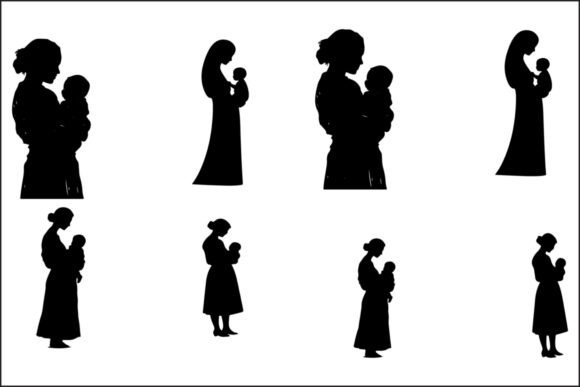
The immediate strength of the Mother and Child Silhouette, Walking Mom is its narrative clarity. Unlike static portraits, the walking pose implies movement, journey, and guidance. In the realm of Crafts and Graphics, silhouettes are often chosen for their simplicity, but this specific layout offers enough negative space to prevent the design from feeling heavy or blocky on fabric. When I first loaded the files, the clean lines suggested that this would digitize well without excessive jump stitches. For an embroidery project, this is crucial; we want the story to be told through the shape, not obscured by messy trims or dense underlay that puckers the garment. The mood is universally appealing, making it a safe yet poignant choice for a wide demographic, from new mothers to grandparents seeking a meaningful personalized gift.
Real-World Application: Stitching a Custom Tote Bag
To truly test the Mother and Child Silhouette, Walking Mom, I decided to apply it to a canvas tote bag design. Totes are a staple for small shop products and craft fairs because they offer a flat, stable surface ideal for testing stitch definition. My goal was to create a "Mom & Me" market bag that felt organic rather than mass-produced.
I opted for a tone-on-tone approach using a warm taupe thread on natural unbleached canvas. Because the source files include EPS, SVG, PNG, and JPG sets, I had excellent reference material for redigitizing or adjusting the embroidery file to suit my specific machine. The walking posture required careful attention to the legs and feet; in silhouette embroidery, these thin connecting points are often where designs fail. I adjusted the stitch density slightly to ensure the ankles wouldn't break under tension while maintaining a smooth satin stitch edge. The result was a crisp, recognizable figure that didn't sink into the canvas weave. This test confirmed that the design holds up beautifully on medium-weight utility fabrics, making it a strong candidate for aprons, garden flags, and nursery wall hangings.
Versatility Across Apparel and Decor
Beyond tote bags, this silhouette performs exceptionally well in several key categories for commercial embroidery and handmade businesses:
- Sweatshirt Embroidery: The design’s vertical orientation fits perfectly on the left chest or centered yoke area. It provides a minimalist aesthetic that appeals to modern moms who prefer subtle branding over loud graphics.
- Baby Embroidery: When scaled down, the silhouette works as a lovely accent on bibs or blanket corners. However, scaling requires checking that the mother’s hand holding the child’s hand remains distinct and doesn't merge into a blob.
- Holiday Embroidery: This isn't just for Mother’s Day. The walking theme translates beautifully to Christmas stockings (walking toward the tree) or Easter bonnets, extending the product's shelf life year-round.
- Embroidered Patches: The solid shape makes an excellent base for merrowed-edge patches. The high contrast of a silhouette ensures readability even at smaller patch sizes.
Navigating Fabric Challenges and Technical Limits
While the Mother and Child Silhouette, Walking Mom is versatile, it is not immune to the physics of needle and thread. During my evaluation, I identified specific scenarios where caution is necessary. Silhouettes rely entirely on outline integrity; if the edge distorts, the image fails.
Stretchy Fabrics: On knits like jersey or performance tees, the long vertical lines of the figures can cause tunneling. You must use a high-quality cutaway stabilizer and potentially a topping to keep the stitches sitting on top of the fabric. Without proper stabilization, the walking legs may appear wavy after washing.
Textured Surfaces: Avoid using this design on terry cloth towels or deep-pile fleece unless you use a water-soluble topping. The fine details of the hands and feet will get lost in the texture, ruining the silhouette effect. For kitchen towels, consider placing the design on a smooth cotton band rather than directly on the terry loop.
Curved Surfaces: If you plan to use this on caps, be aware that the vertical height of a walking figure fights against the curve of the hat brim. You may need to rotate the design or reduce the size significantly to prevent distortion at the top and bottom edges.
Impact on Product Value and Customer Trust
In the competitive landscape of Etsy sellers and independent makers, presentation dictates price. A cleanly executed Mother and Child Silhouette signals professionalism. When customers see sharp edges and balanced proportions, they trust the quality of the entire finished product. Conversely, a silhouette with gapping outlines or uneven fill stitches looks amateurish and devalues the item.
Using the provided digital embroidery file assets (PNG/JPG) for printable mockups also enhances buyer engagement. Before a customer ever sees the physical stitch-out, they fall in love with the graphic representation. Having high-resolution source files allows you to create cohesive branding across your website, social media, and product tags. This consistency builds brand recognition, especially for family-related businesses or daycares using the design for logos. The ability to offer matching digital and physical products creates multiple revenue streams from a single design asset.
Essential Designer Notes for Success
Before adding the Mother and Child Silhouette, Walking Mom to your production lineup, adhere to these professional best practices:
- Verify Licensing: Always confirm whether your purchase includes commercial rights for selling finished goods versus just personal use. This is critical for craft business compliance.
- Test Stitch on Scrap: Never run this design directly on a final product without a test. Check specifically for registration issues between the mother and child figures.
- Contrast Check: Test the design in black and white. If the silhouette isn't instantly readable in grayscale, it won't read well in low-contrast thread colors. High contrast is non-negotiable for silhouettes.
- Review Small Details: Inspect the connection points (hands, feet) at your intended print size. If they are thinner than 1mm, increase the column width or switch to a running stitch outline for those specific areas to prevent needle breaks.
- Mockup Validation: Use the included JPG/PNG sets to create realistic previews, but always add a disclaimer that actual stitching may vary slightly from the digital graphic. This manages customer expectations regarding texture and sheen.
Ultimately, the Mother and Child Silhouette, Walking Mom is a robust addition to any embroiderer’s library. It balances sentimental value with technical feasibility, provided you respect the limitations of your fabric and machine. Whether you are creating a signature line of custom apparel or a heartfelt handmade product for a client, this design offers the flexibility and emotional depth needed to create items that truly resonate. By approaching it with a critical eye toward stitch mechanics and end-use application, you can transform a simple digital graphic into a profitable and cherished textile art piece.