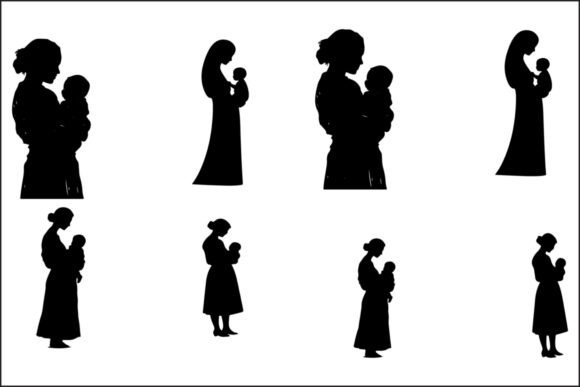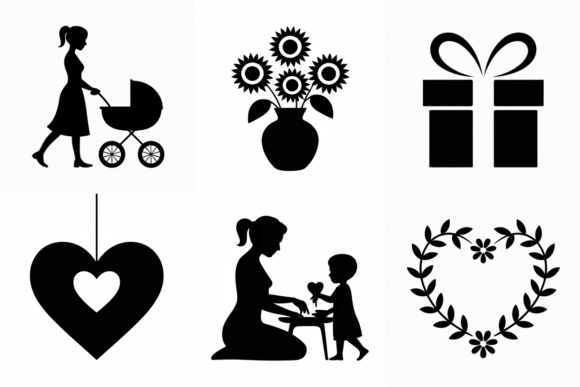
Mom and Baby Silhouette Icons: An Embroidery Review
As a professional embroidery designer and product reviewer, I approach every new graphic with a critical eye toward stitchability. When evaluating the Mom and Baby Silhouette Icons, my first thought isn't just about the aesthetic appeal of the vector art; it is about how those clean lines will translate into thread on fabric. This design, provided in SVG and EPS formats, presents a unique opportunity for crafters and small business owners, but transitioning from a digital cut file to a successful machine embroidery design requires careful consideration of structure, density, and end-use application.
First Impressions: Emotional Resonance and Vector Clarity
The immediate strength of the Mom and Baby Silhouette Icons lies in their emotional simplicity. Silhouettes are timeless because they allow the viewer to project their own experiences onto the image. For an embroidery project, this minimalism is a double-edged sword. On one hand, the lack of intricate internal detail means fewer color changes and faster run times. On the other hand, silhouettes rely entirely on edge definition. In the world of Graphics and Crafts, a jagged vector line might be forgiven on a screen, but in embroidery, a poor edge translates directly to a messy satin stitch or uneven fill stitch boundary.
Visually, these icons evoke warmth, nurturing, and family connection. They naturally belong on items that celebrate motherhood, new beginnings, and familial bonds. The shapes suggest a softness that pairs beautifully with organic fabrics like cotton interlock, linen, or fleece. However, because silhouettes are solid shapes, they carry visual weight. As a designer, I look at this file and immediately assess whether the negative space is sufficient to prevent the design from looking like a heavy patch of thread on a delicate garment.
Real-World Application: Stitching a Custom Nursery Tote
To truly evaluate this asset, I mentally walked through a recent client request: a personalized diaper bag tote for a new mom’s boutique launch. This scenario tests the design's versatility across both custom apparel and functional accessories. A tote bag design needs to be durable enough to withstand wear while remaining aesthetically pleasing as a fashion statement.
For this project, the Mom and Baby Silhouette Icons served as the central motif. Because the source files are SVG and EPS, scaling was not an issue for digitizing purposes. I opted to treat the silhouette as an applique design rather than a full fill stitch. This decision was crucial for a handmade product intended for daily use. A solid fill stitch version of a large silhouette can become stiff and bulletproof, distorting the canvas fabric of the tote. By using the silhouette outline as a guide for raw-edge applique secured with a tight satin stitch border, the finished product retained its drape and flexibility while showcasing the graphic clearly.
This approach also highlights the value for an Etsy seller or craft business. Using these icons as applique templates reduces thread consumption and production time, increasing profit margins without sacrificing the perceived value of the personalized gift. The clean lines of the silhouette made for excellent printable mockups, allowing me to show the client exactly how the placement would look before a single needle pierced the fabric.
Navigating Fabric Variables and Technical Constraints
While the Mom and Baby Silhouette Icons are versatile, they demand respect for fabric physics. Not all textiles handle solid shape embroidery equally well. Here is where practical judgment separates hobbyists from professionals:
- Stretchy Fabrics: If you are planning sweatshirt embroidery or baby clothes, you must account for knit stability. Silhouettes have continuous perimeter stitching that can cause tunneling on jersey knits if the stabilizer is inadequate. Always test on scrap fabric with the exact same stretch percentage as your finished product.
- Textured Surfaces: On terry cloth towels or minky blankets, the crisp edges of a silhouette can get lost. You may need to add a knockdown stitch layer beneath the design or increase the column width of your satin stitch borders to ensure the Mom and Baby Silhouette Icons remain legible against high-pile textures.
- Small Hoop Sizes: Scaling down silhouettes requires caution. If the neck or arm areas of the icon become thinner than 2mm, a standard satin stitch may fail. In these instances, converting those specific sections to a running stitch or bean stitch is necessary to maintain structural integrity, even if it alters the original graphic style slightly.
- Dark vs. Light Fabrics: Silhouettes are traditionally dark, but in embroidery, contrast is king. White thread on white fabric relies entirely on shadow and texture. For dark garments, ensure your digital embroidery file includes adequate underlay to prevent the fabric grain from showing through lighter thread colors.
Commercial Viability and Brand Consistency
For creative entrepreneurs and small shop product lines, consistency builds trust. The Mom and Baby Silhouette Icons offer a cohesive visual language that can span multiple product categories. Imagine a holiday embroidery collection where the same silhouette appears on a baby bib, a mama sweatshirt, and a decorative pillow cover. This repetition creates brand recognition that generic clipart cannot achieve.
However, commercial embroidery requires verifying licensing. Before listing any finished product or selling the digital assets themselves, confirm the terms associated with these specific SVG and EPS files. Professionalism means respecting intellectual property. Additionally, when creating listings, use black and white mockups alongside colored versions to demonstrate the design's adaptability. Buyers need to see that the silhouette works as a subtle tone-on-tone accent just as well as it does as a bold statement piece.
Designer Notes for Optimal Results
Based on my evaluation of similar vector-to-stitch workflows, here are actionable steps to ensure success with this design:
- Verify File Integrity: Since the product description specifies SVG and EPS, remember these are vector formats, not pre-digitized embroidery files (like DST or PES). You or your digitizer must create the stitch file. Do not assume auto-digitizing software will perfectly interpret the curves of a mother-and-child silhouette; manual adjustment of node points is often required for smooth stitch flow.
- Test Stitch Density: Before committing to a bulk order of baby embroidery items, run a sew-out. Check the back of the sample. If the bobbin thread is visible on top or the fabric is puckering despite proper hooping, your density is too high for that specific material.
- Evaluate Edge Quality: Zoom in to 400% on your vector file before digitizing. Smooth out any jagged anchor points. In embroidery, a 1mm vector glitch becomes a noticeable jump stitch or thread break. Clean vectors equal clean stitches.
- Consider Washability: For items like kitchen towels or baby blankets that face frequent laundering, avoid extremely thin connecting points in the silhouette. Reinforce these areas with additional underlay or widen the stitch path to prevent fraying over time.
- Mockup Realistically: When marketing to clients, avoid flat, digital-only previews. Place the design on photos of actual fabric textures. This manages expectations regarding how the Mom and Baby Silhouette Icons will interact with weave patterns and pile heights.
Ultimately, the Mom and Baby Silhouette Icons represent a strong foundation for meaningful, marketable embroidery projects. Their success depends less on the graphic itself and more on the maker’s willingness to adapt the design to the physical realities of thread and textile. Whether you are crafting a heartfelt personalized gift or building a scalable product line for your craft business, treating this vector art with technical respect will yield results that honor both the medium and the message. Always prioritize testing and fabric compatibility to ensure your finished product reflects the quality your customers expect and your brand deserves.